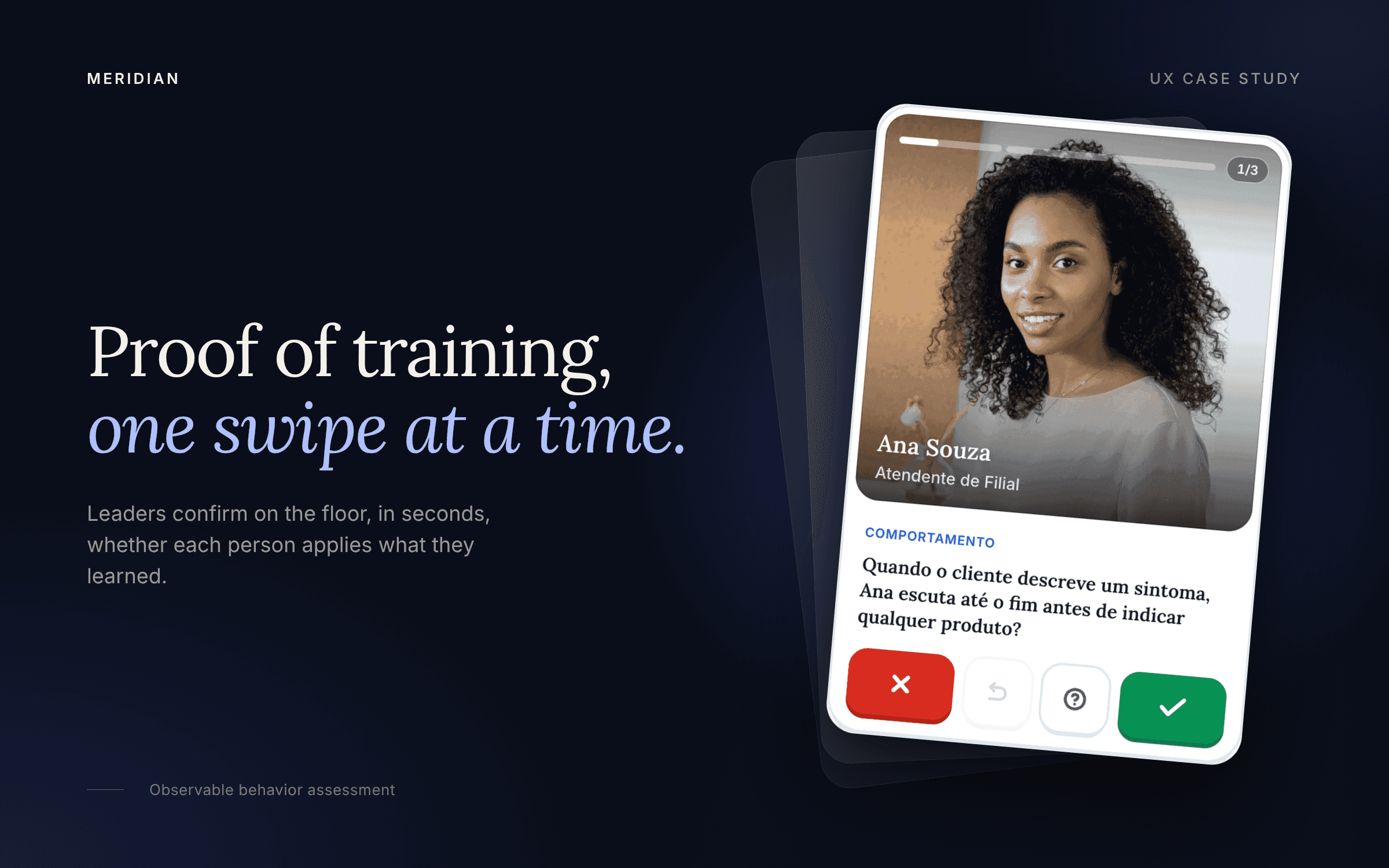
The one where a manager's quick swipe became proof that training actually changed how people work.
Today the only proof of training is a certificate. We wanted evidence it's applied at work, and only leaders on the floor can give it, so the check had to fit in their breaks.
If you're in a rush, here's a summary 👇
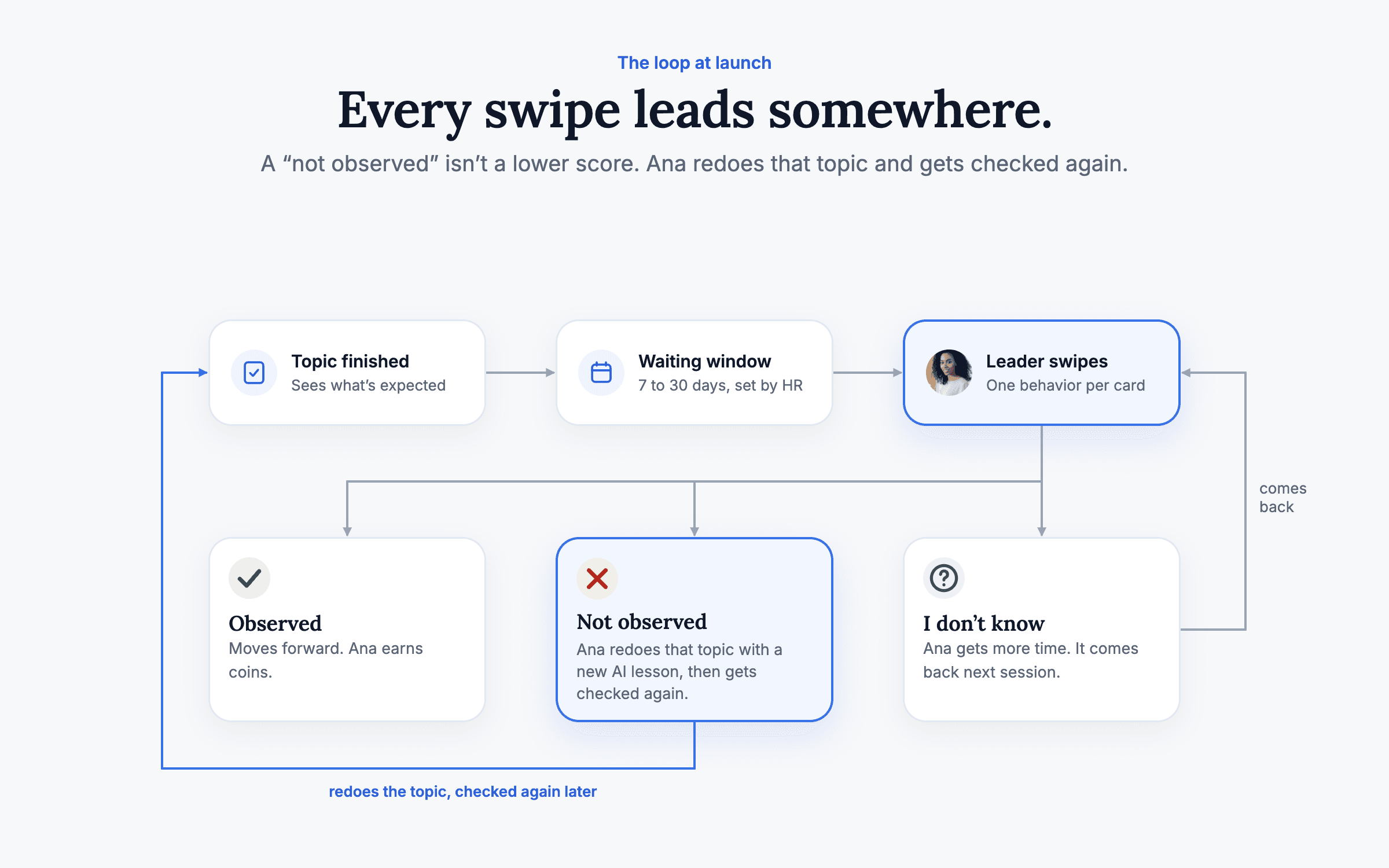
Mobiliza is a Brazilian company that makes training software for businesses. Its new platform, Meridian, is built for companies with operational teams and leaders on the floor. A certificate shows someone finished a course, not that they use it at work. Only their manager can see that, and he has minutes between tasks. So I designed the assessment as a swipe: a photo, one behavior, observed or not observed, in seconds. A "not observed" isn't a lower score. The employee redoes that topic with a new AI-generated lesson, and the behavior is checked again later. This review shipped in the same delivery, and in an early test it stood out to clients as one of the most valuable parts. Their feedback also added a third answer, "I don't know," so an unsure leader gives the employee more time instead of a wrong "no."
My Role
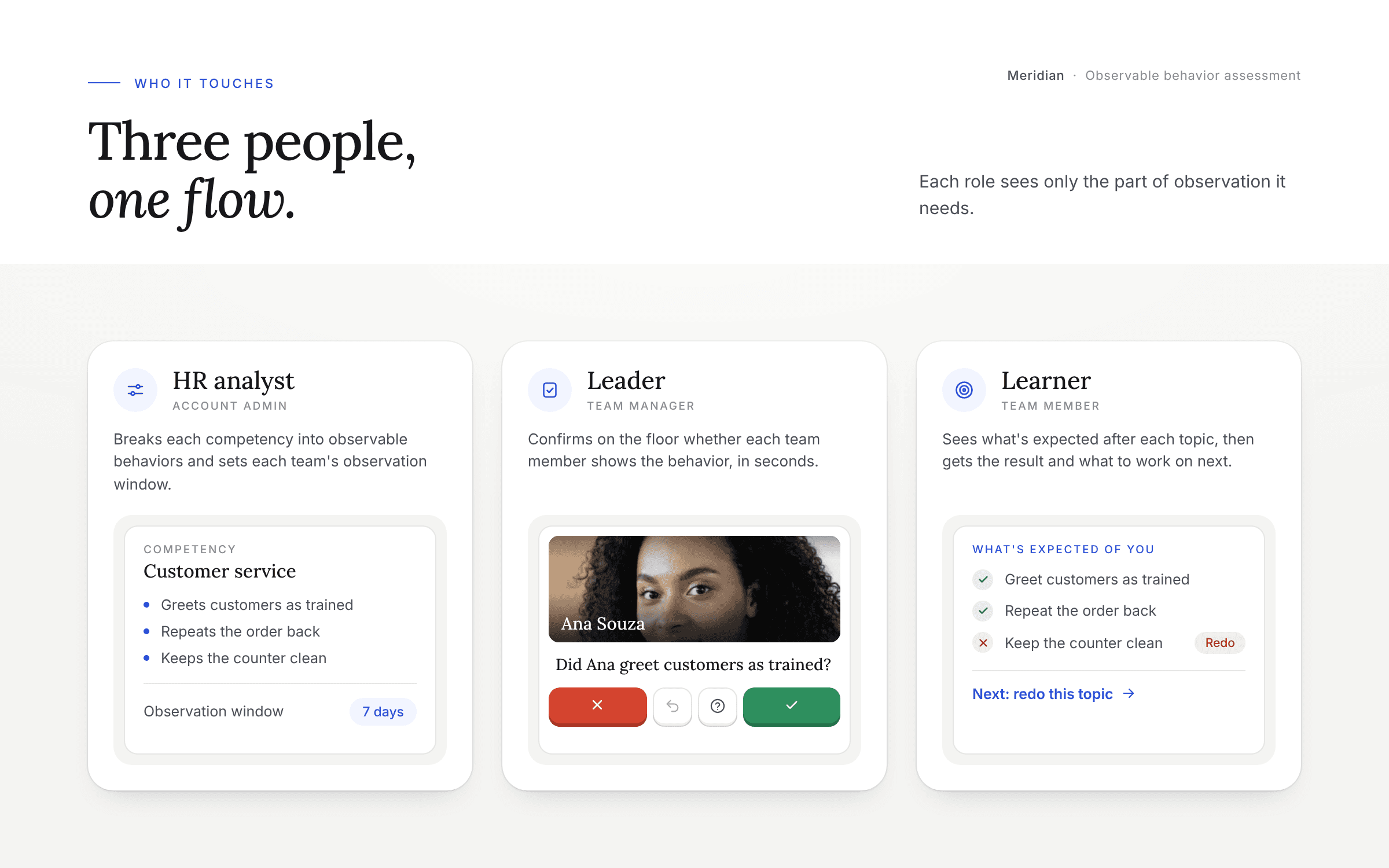
Product designer at Mobiliza. I partnered with Mobiliza's CEO, and a developer. Owned this feature from product management to front-end development, during Stedian's creation, before there was any product.
Problem
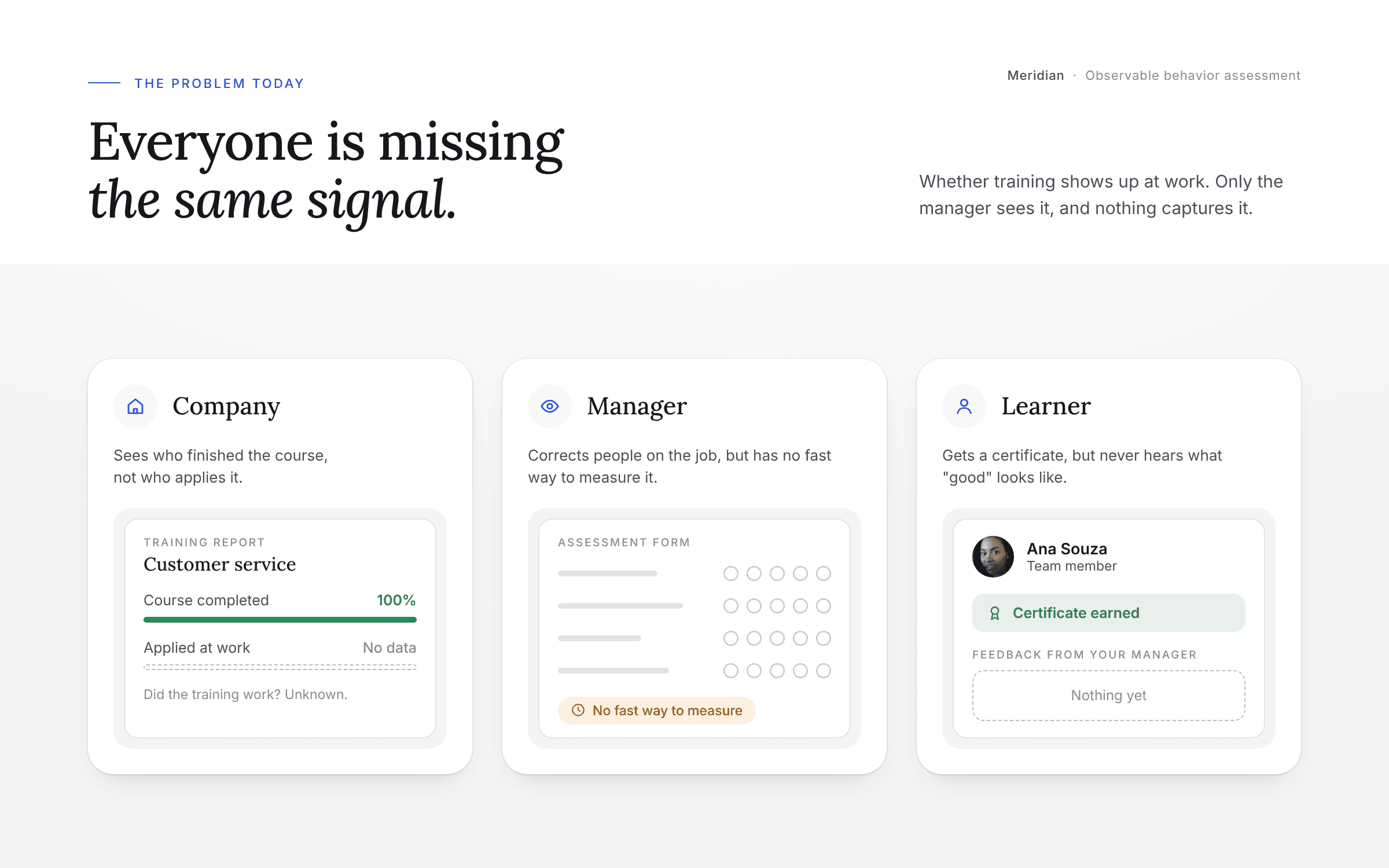
Each role in a chain needs specific competencies, but a certificate only shows someone finished the course. Nothing shows whether they apply it on the job. Leaders see this every day, but it never gets recorded.
Goals
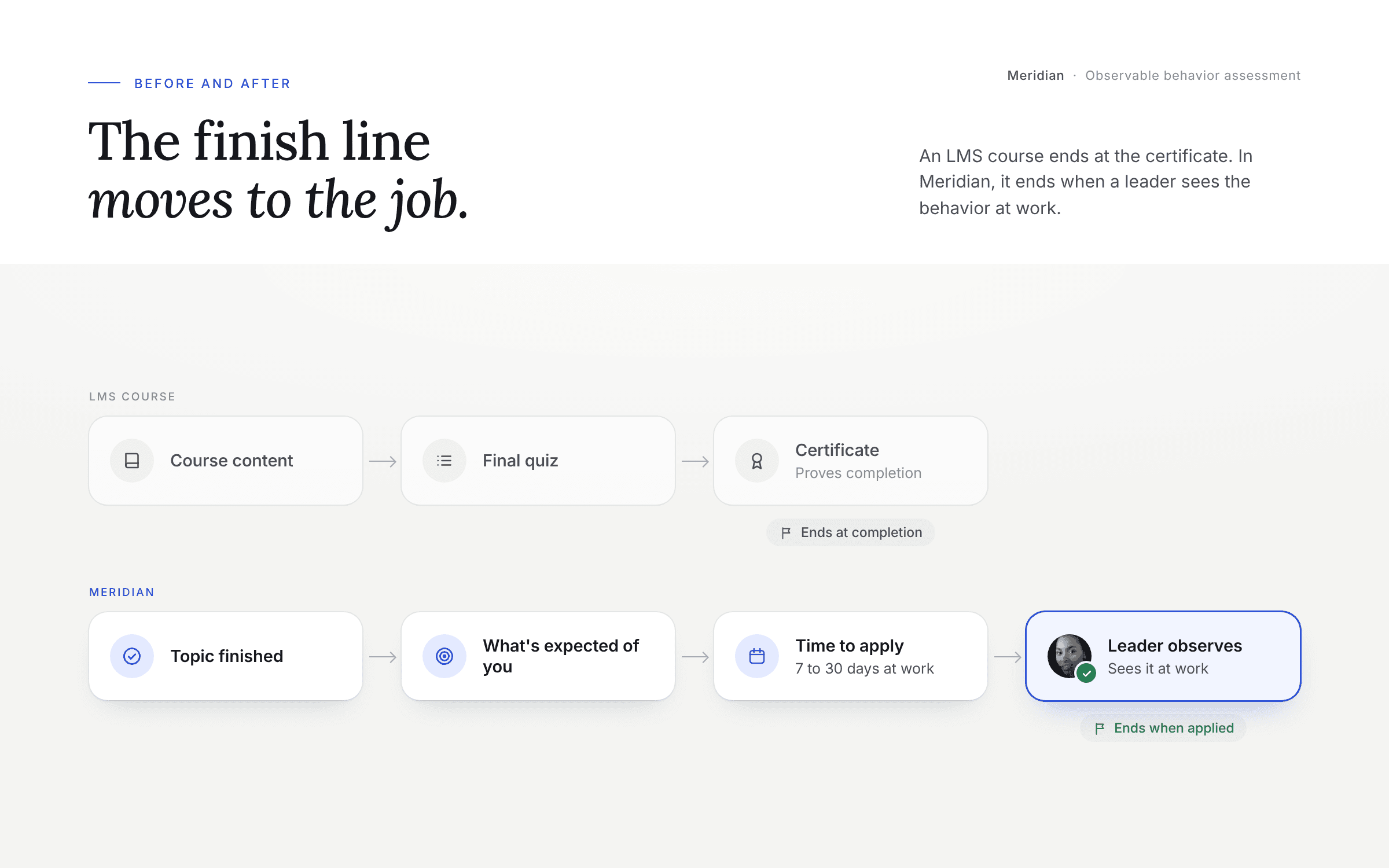
Bring the leader into the learning loop without turning it into paperwork for them, and without making it feel like punishment for the learner. Our assumption was: Leaders can show whether someone has a competency by confirming what they see on the job.
Leaders needed something fast and easy
This was during Stedian's creation, so there was no product yet. Together with Mobiliza's CEO, I interviewed 8 leaders across 3 client companies. Most would give assessment five minutes a week, at most. One store manager put it this way: "If it looks like a performance review, I'll leave it for Friday, and Friday never comes." So confirming a behavior had to be fast and effortless, closer to an app leaders already use every day than to a review form.
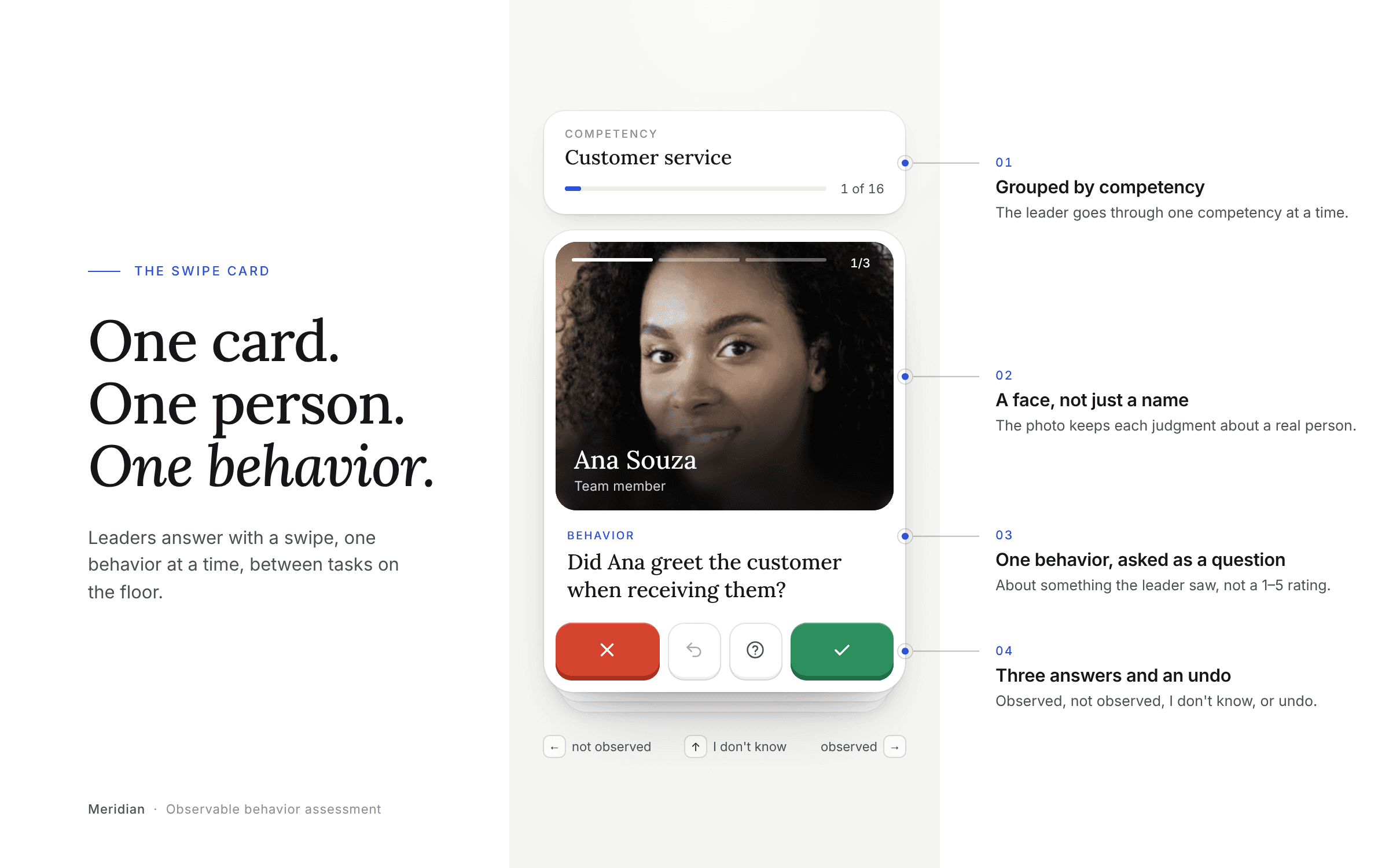
The swipe card
A photo, one behavior, observed or not observed, in seconds. Cards are grouped by competency, so the leader stays on one skill at a time, and every swipe saves instantly, so a leader can stop halfway and lose nothing.
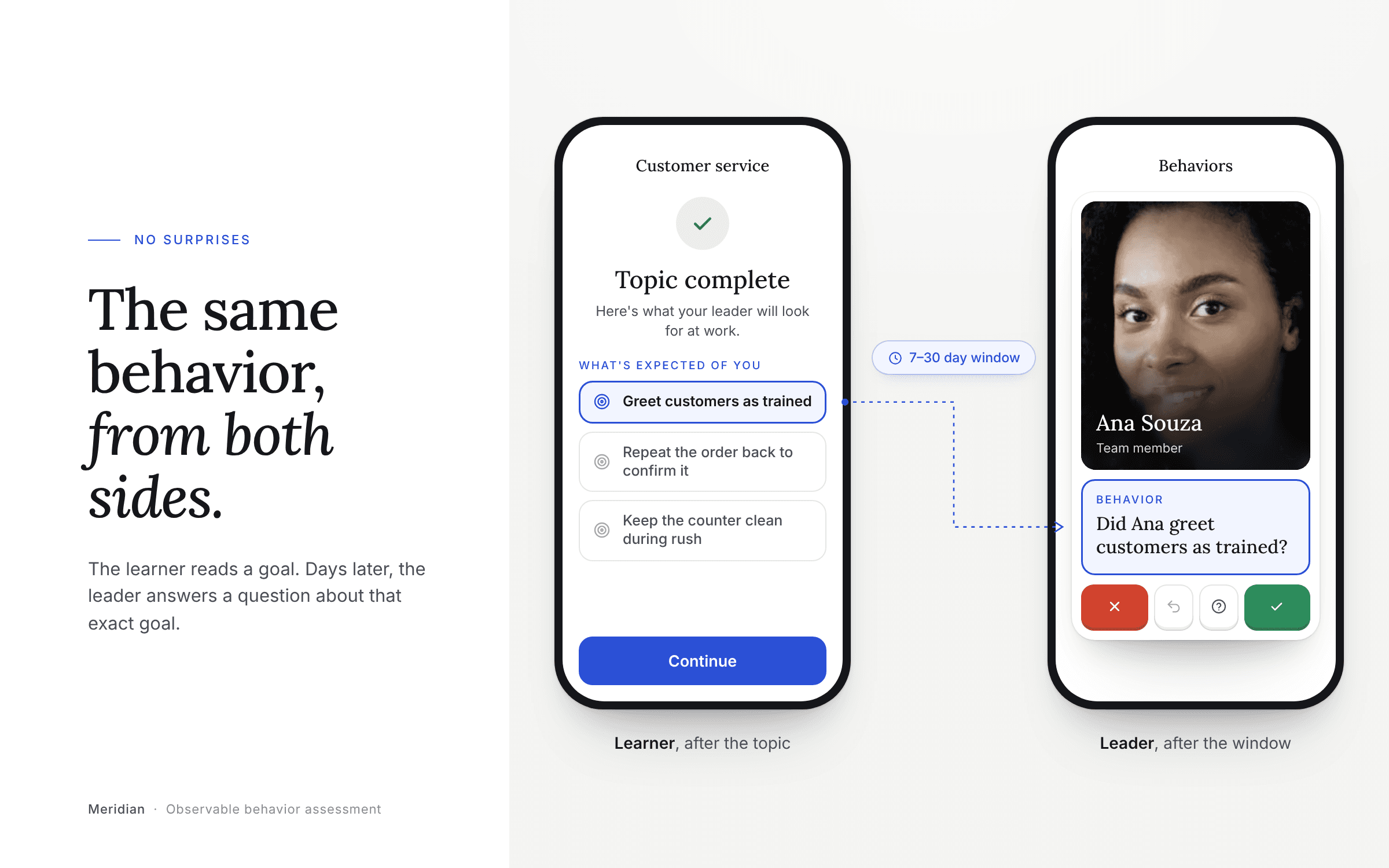
No surprises for the learner
After each topic, the learner sees "What's expected of you": the exact behaviors their leader will look for. The assessment becomes a goal to work toward, not a test they didn't know about.
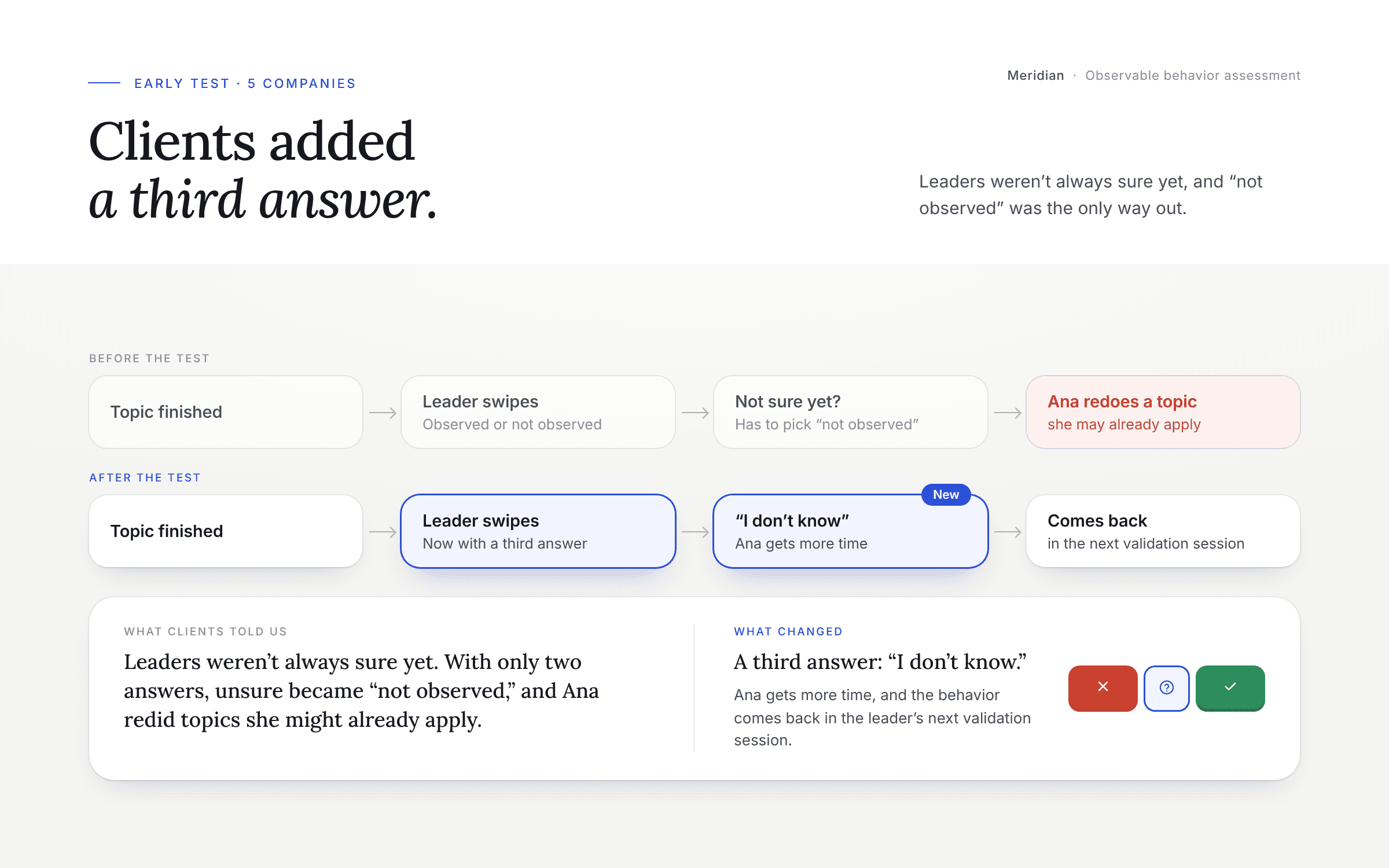
Validation
Clients loved the review lesson, but two answers weren't enough. Five client companies tested the flow before launch, and I interviewed each. A "not observed" turning into a new lesson was the part they valued most, but unsure leaders picked it too, so Ana redid topics she might already apply.
What I changed
What worked The review. Clients saw a "not observed" that turns into a new lesson on that exact topic as one of the most valuable parts of the flow. What we heard Leaders weren't always sure yet. With only two answers, unsure became "not observed," and Ana redid topics she might already apply. What I changed Clients' feedback added a third answer, "I don't know." When the leader isn't sure yet, Ana gets more time, and the behavior comes back in his next validation session.
How success will be measured
Now we observe the delivery. I defined success up front, and every metric is tracked in PostHog. North star: the share of "not observed" behaviors that become "observed" on the next check. I also track team coverage per session, median time per card, and the "I don't know" rate per behavior. The anti-metric is leaders swiping without thinking: under 10 seconds between answers, with 98% or more observed. Interviews with leaders and learners cover what the numbers miss. A training platform that stops at the certificate measures the wrong thing. Observation is where Meridian meets the work itself.