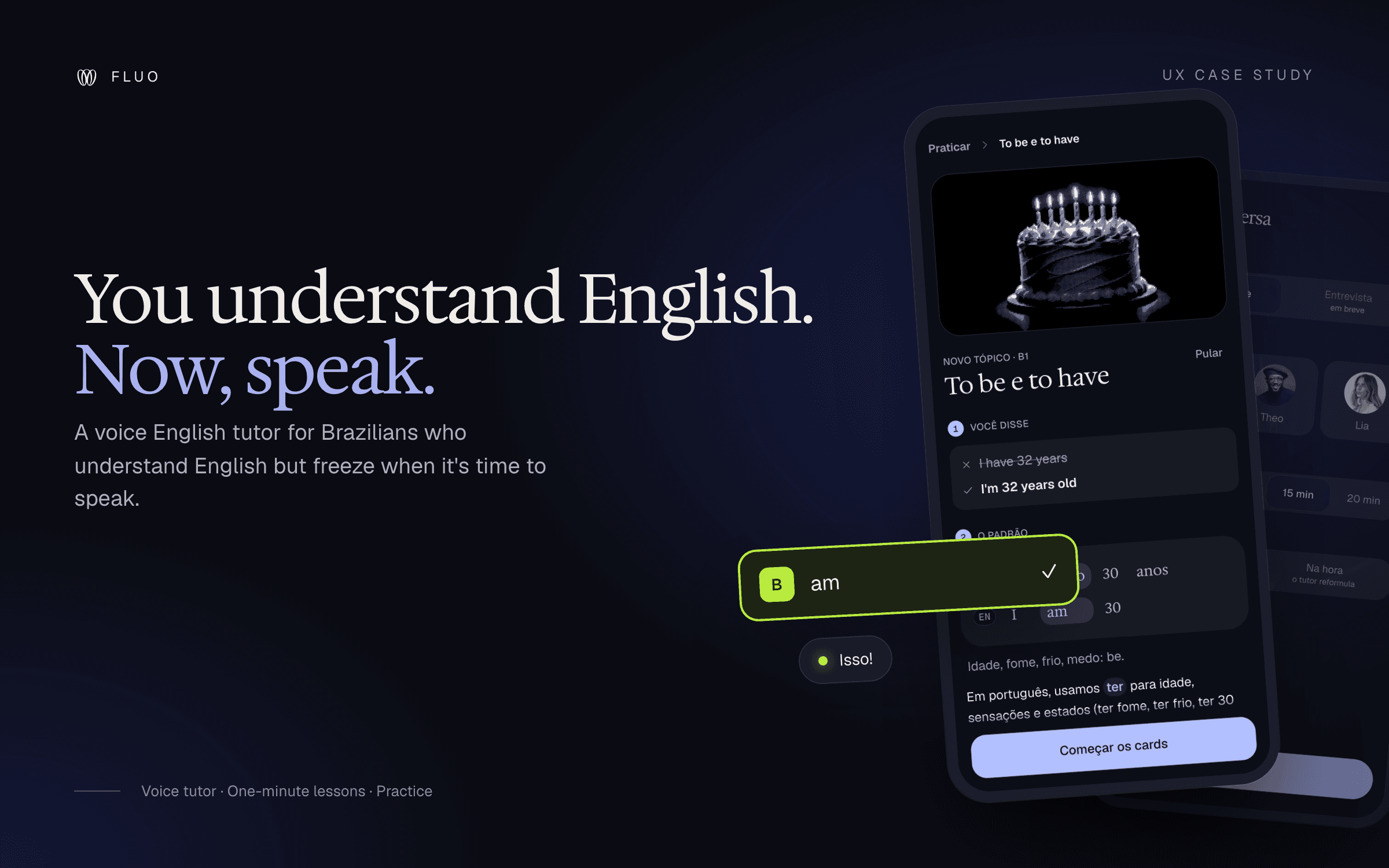
The one where I designed a voice tutor with one-minute lessons and practice that sounds like progress.
Brazilians who understand English still freeze when they speak. Fluo pairs voice conversations with short grammar lessons and activities, each with its own sound, so practicing feels good enough to come back to every day.
Visit fluoenglish.xyzIf you're in a rush, here's a summary 👇
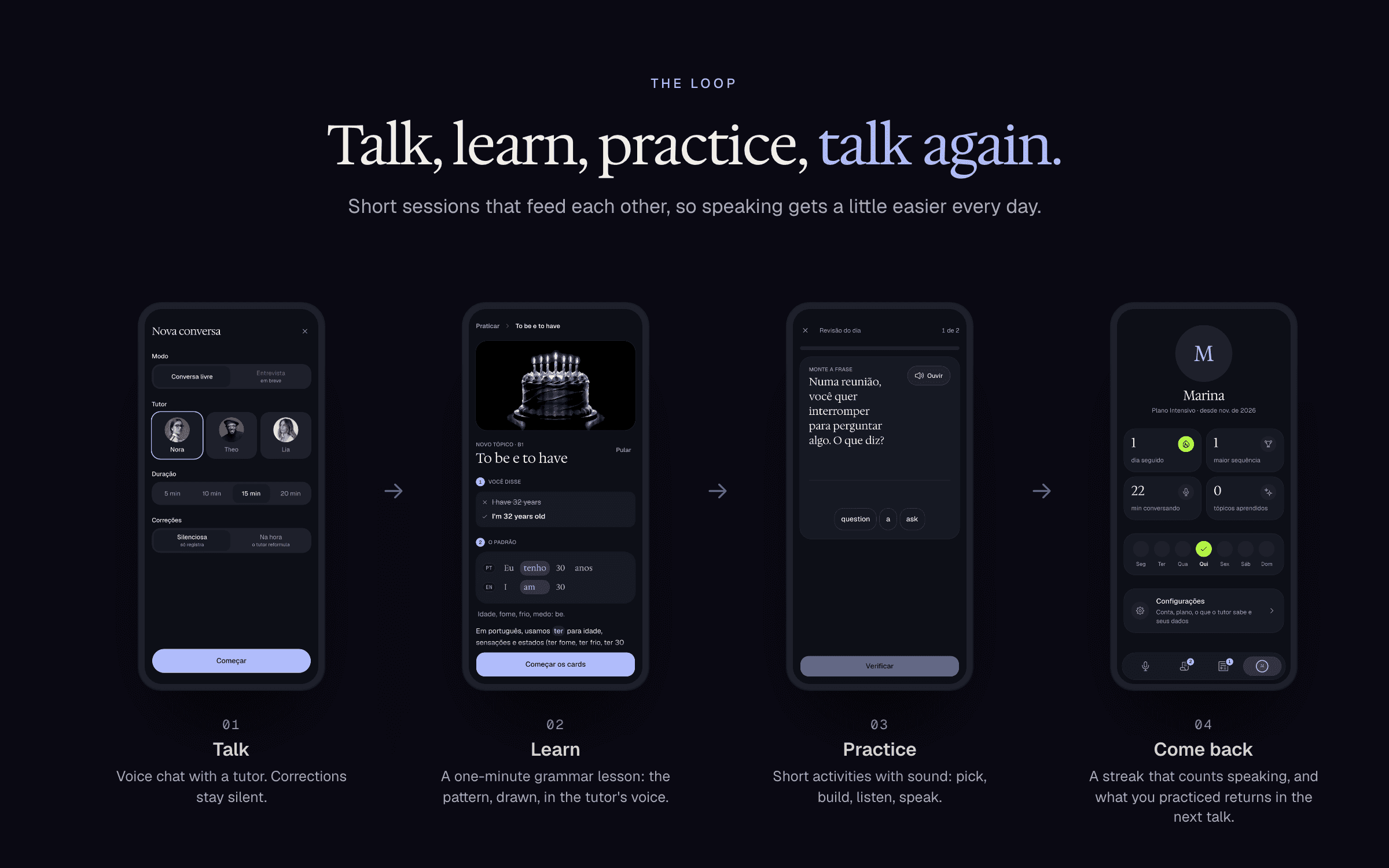
Fluo is a voice English tutor for Brazilians who understand English well but freeze when they have to speak. It's built around a daily loop: talk to a tutor by voice, learn the grammar behind it in a one-minute lesson, then practice with short activities: pick the word, build the sentence, listen, say it out loud. Every answer has its own synthesized sound, and a streak counts the days you actually spoke. The mistakes from each conversation tie it together: they decide what the lessons and activities bring back. Fluo is live, with paid plans priced by conversation time.
My Role
Product designer and builder. I owned Fluo end to end, from product decisions, flows, UI and sound to the front end, the AI prompts and the launch, working with AI coding agents.
Problem
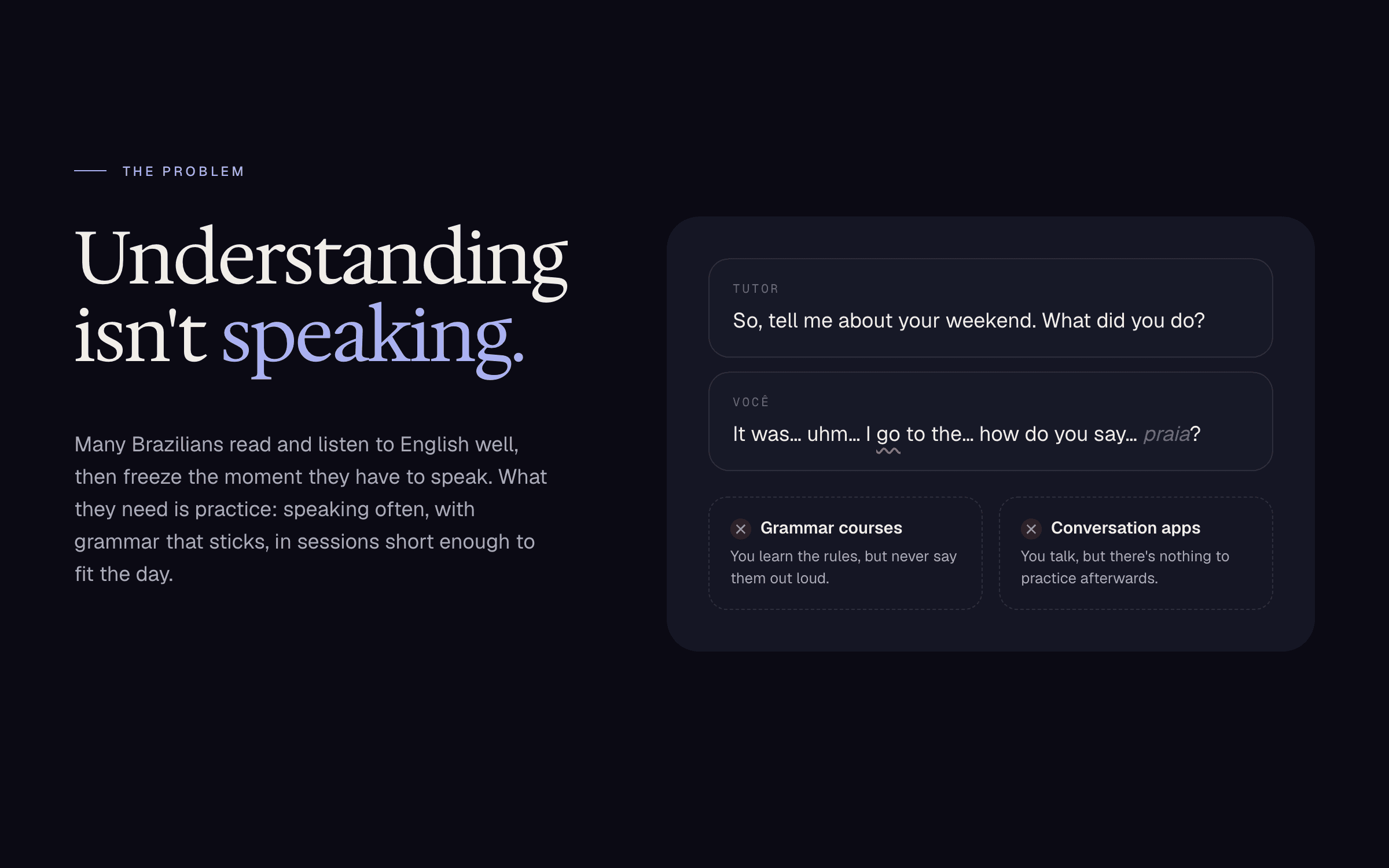
Many Brazilians read and listen to English well, then freeze the moment they have to speak. What they need is practice: speaking often, with grammar that sticks. Grammar courses teach the rules but never make you say them. Conversation apps let you talk, but leave nothing to practice afterwards. And neither fits in the ten minutes most people actually have.
The design challenge
How might we make speaking practice something people come back to every day: short enough to fit a coffee break, and rewarding enough to repeat? Our assumption was: speaking, a short lesson and a few activities, each one feeding the next, build fluency faster than any of them alone.
Talk first
Everything starts with a voice conversation. The tutor has a name, a voice and a memory of your goals, and keeps corrections silent by default, so you keep talking instead of stopping at every slip. Scroll to watch the orb from the landing page become the conversation screen, then listen to Nora, one of the three tutors.
 Nora
No placement test, just the pace
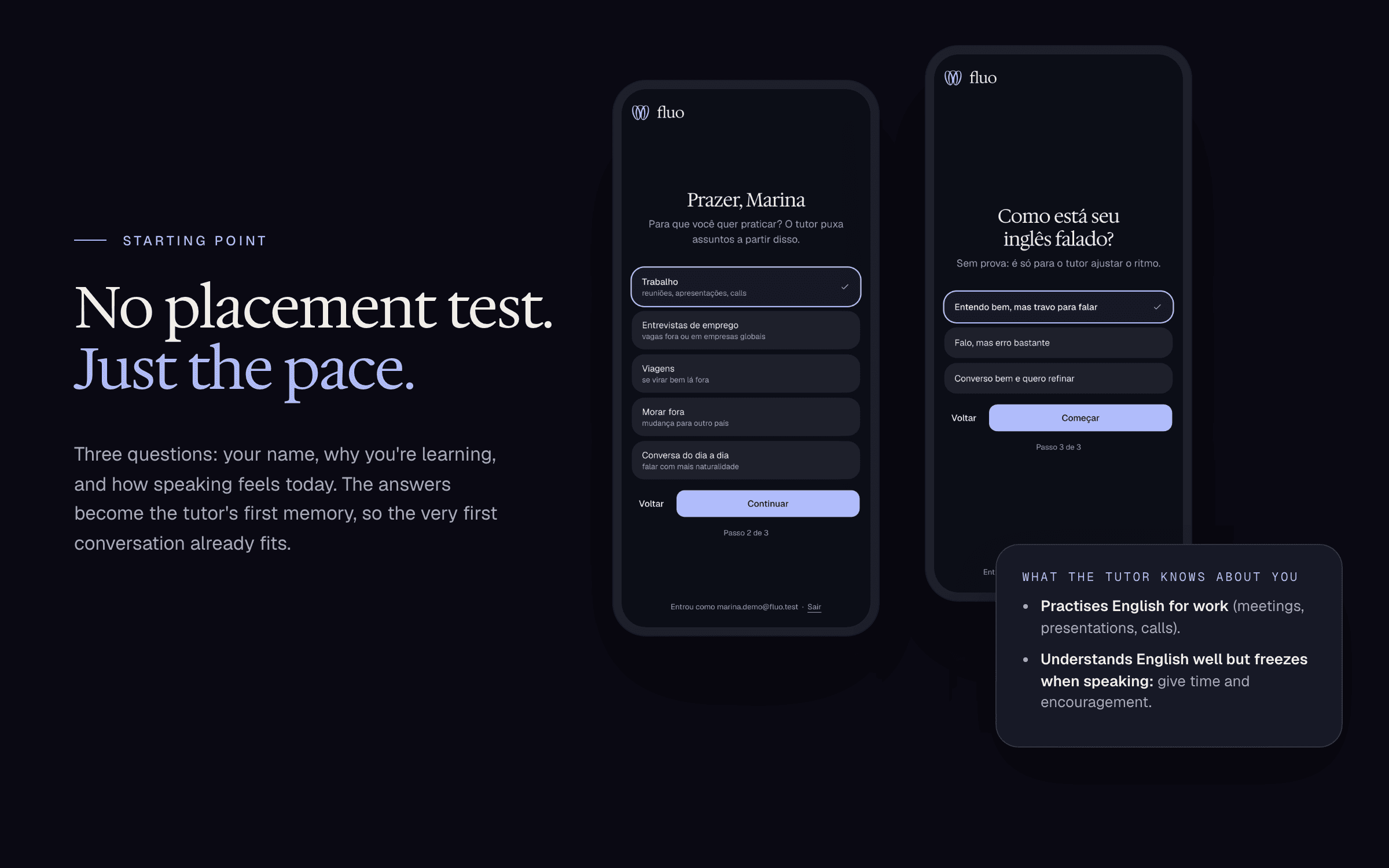
People who freeze when speaking don't need a test on day one. Onboarding asks three things: your name, why you're learning (work, interviews, travel, moving abroad, everyday conversation), and how speaking feels today. The answers become the tutor's first memory, so the very first conversation already fits.
Grammar in one-minute lessons
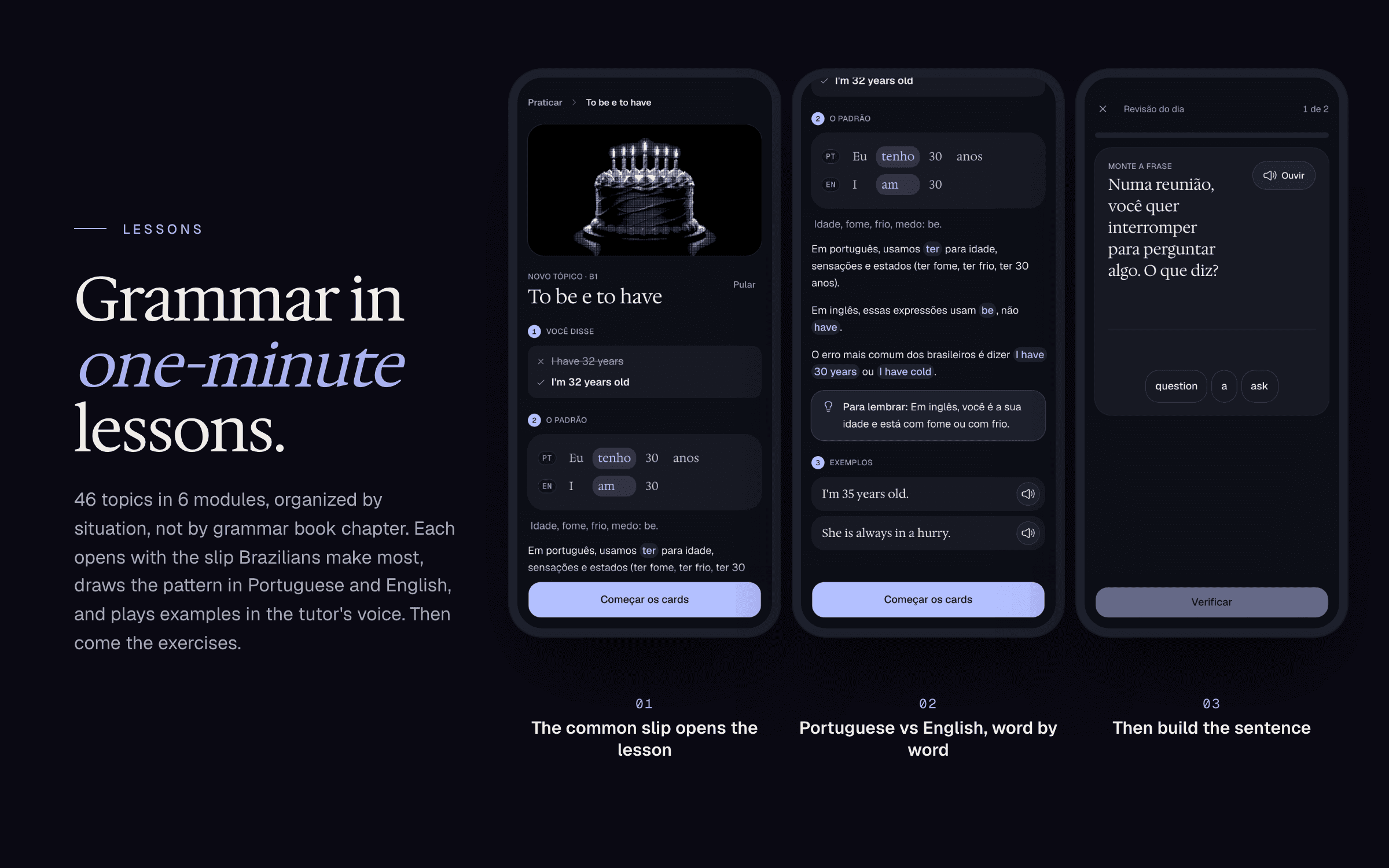
Grammar is organized by situation, not by textbook chapter: talking about yourself, telling what happened, plans, work and meetings, places and quantities, opinions. 46 topics in 6 modules, 15 activities each. Each lesson opens with the slip Brazilians make most ("I have 32 years"), draws the pattern with Portuguese and English side by side, word by word, and plays the examples in the tutor's voice. It takes about a minute. Then the activities start.
Activities that sound like progress
Activities change shape so the same rule comes back in different ways: pick the right word, build the sentence from tiles, listen to it, and say it out loud. Speaking is judged by "you were understood", not by perfect pronunciation. Each answer has its own sound, synthesized live in the browser with no audio files. A correct answer rises a fifth over a warm pad, like a small win. A wrong one falls, quieter and softer, so it never feels like punishment, and the card comes back at the end of the round. Finishing a lesson plays the full arpeggio while a check draws itself in ASCII. Try a short lesson from the "To be e to have" topic below, with sound on. Get one wrong on purpose to hear the difference.
Eu tenho 32 anos.
I 32 years old.
Sound on. Try a wrong answer too: it sounds softer, so it never feels like punishment.
A streak that only counts speaking
The streak screen shows up once a day, after the first conversation or practice session. A conversation only counts if the learner actually spoke, so the number reflects real practice. Every element enters on the beat of its own sound: the flame lights with the rise, the number lands on the hit, and today's dot fills on the high note. Milestones (a week, a month, 100 days, a year) add a fanfare.
7
dias seguidos
- Seg
- Ter
- Qua
- Qui
- Sex
- Sáb
- Dom
Pick a streak to play it, with sound.
Mistakes become personal practice
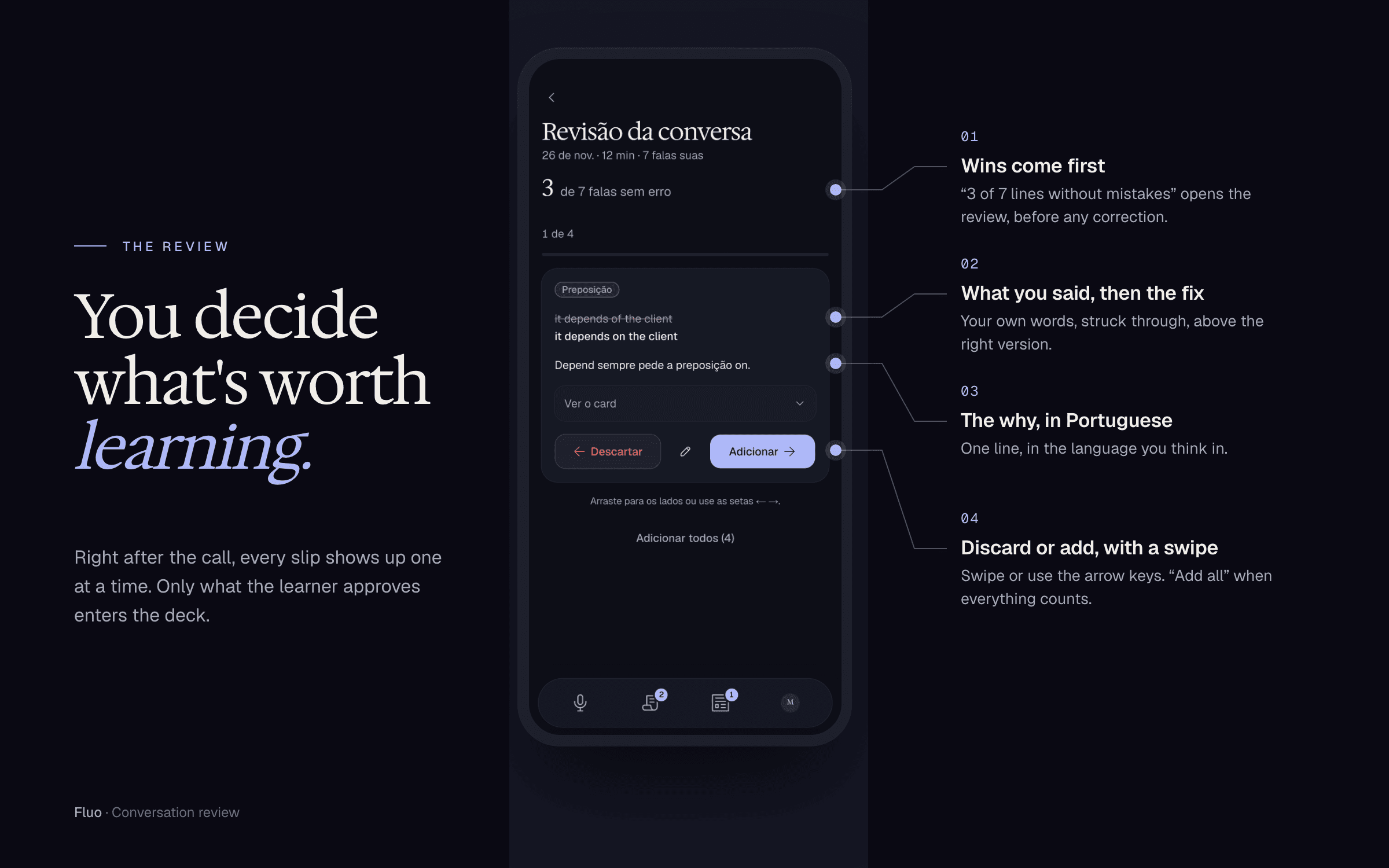
After each conversation, the slips show up one at a time with the fix and a one-line why in Portuguese, opening with what went right ("3 of 7 lines without mistakes"). The learner swipes to keep or discard each one. What they keep joins their daily review, next to the lesson activities, and comes back as a target in the next conversation.
Shipped, used, changed
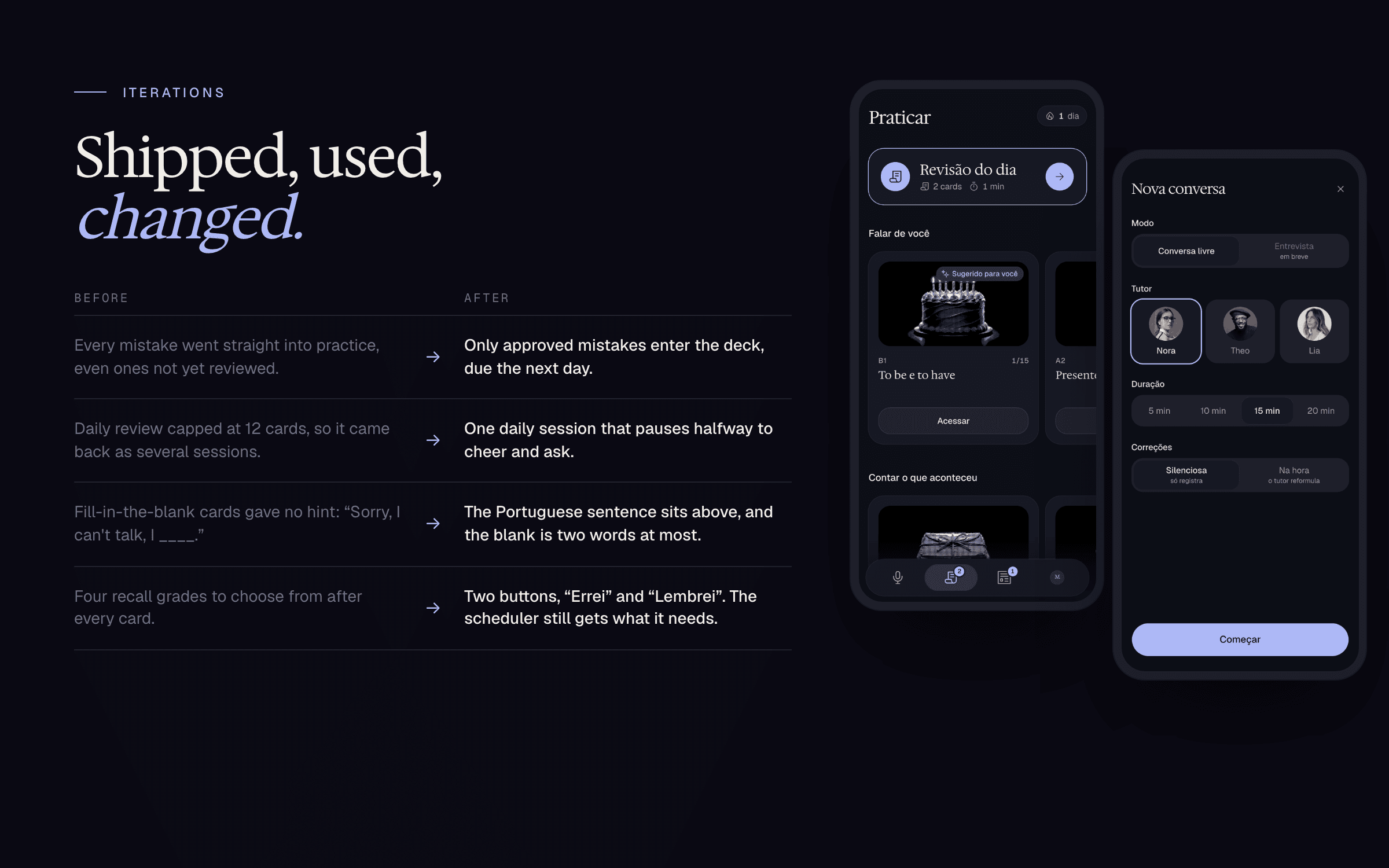
Fluo went live fast and changed in small steps, most of them in practice: The daily review was capped at 12 cards, so it came back as several sessions in a row. Now it's one session that pauses halfway to cheer and ask if you want to keep going. Fill-in-the-blank activities gave no hint of what to fill. Now the Portuguese sentence sits above, and the blank is two words at most. Four recall grades meant a judgment call after every card. Now there are two buttons, "Errei" and "Lembrei", and the scheduler still gets what it needs. Every mistake from a conversation used to go straight into practice. Now only the ones the learner keeps do, due the next day.
How success will be measured
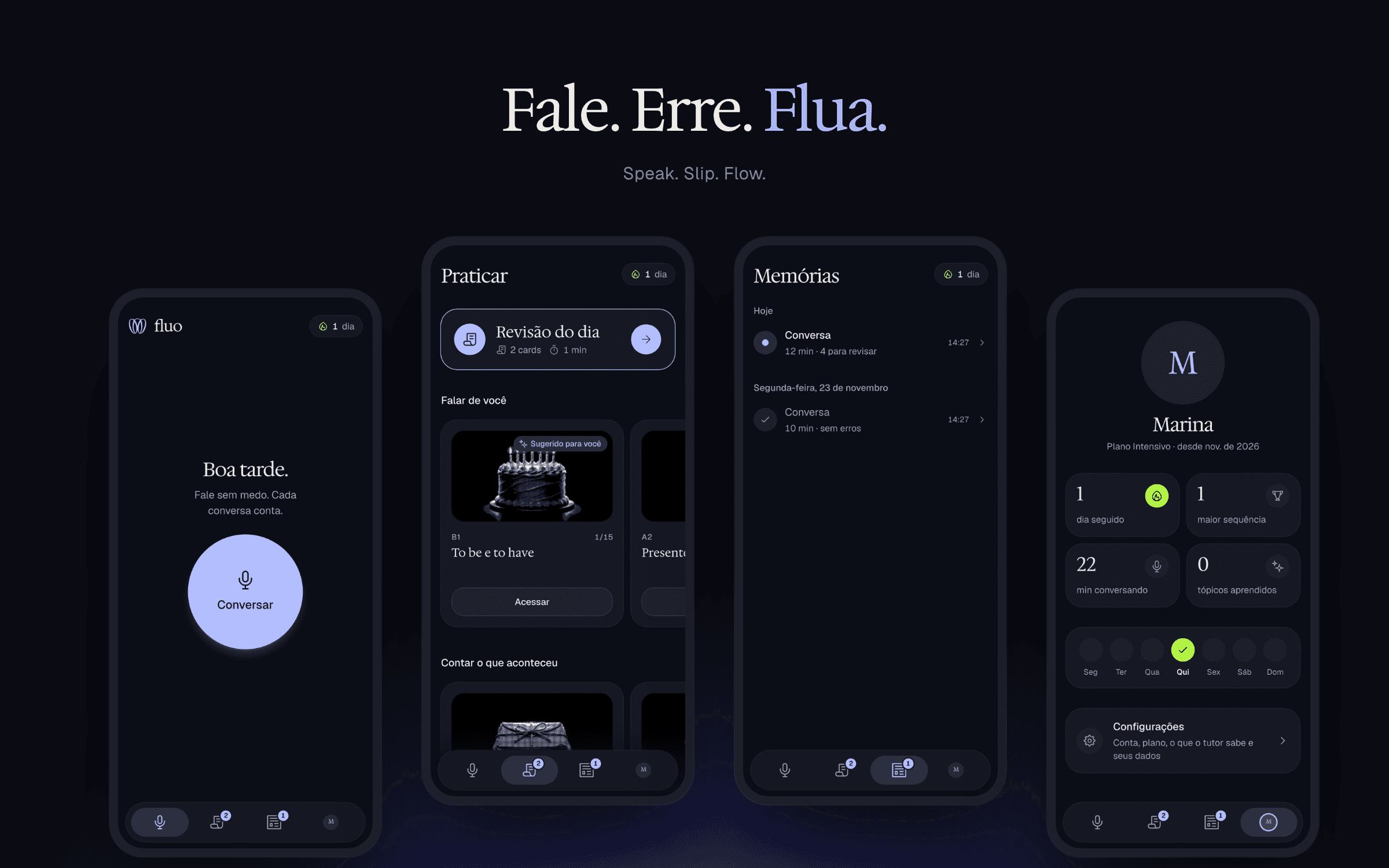
North star: learners who practice on most days of the week, counting a conversation where they spoke or a finished lesson. Alongside it, in PostHog: lesson completion, the share of activities answered right on the first try, how long streaks last, and minutes of conversation per week. As a quality check, Fluo already records whether something practiced comes back right in a later conversation. A lesson someone finishes is good. Saying it right the next time they speak is the point.